
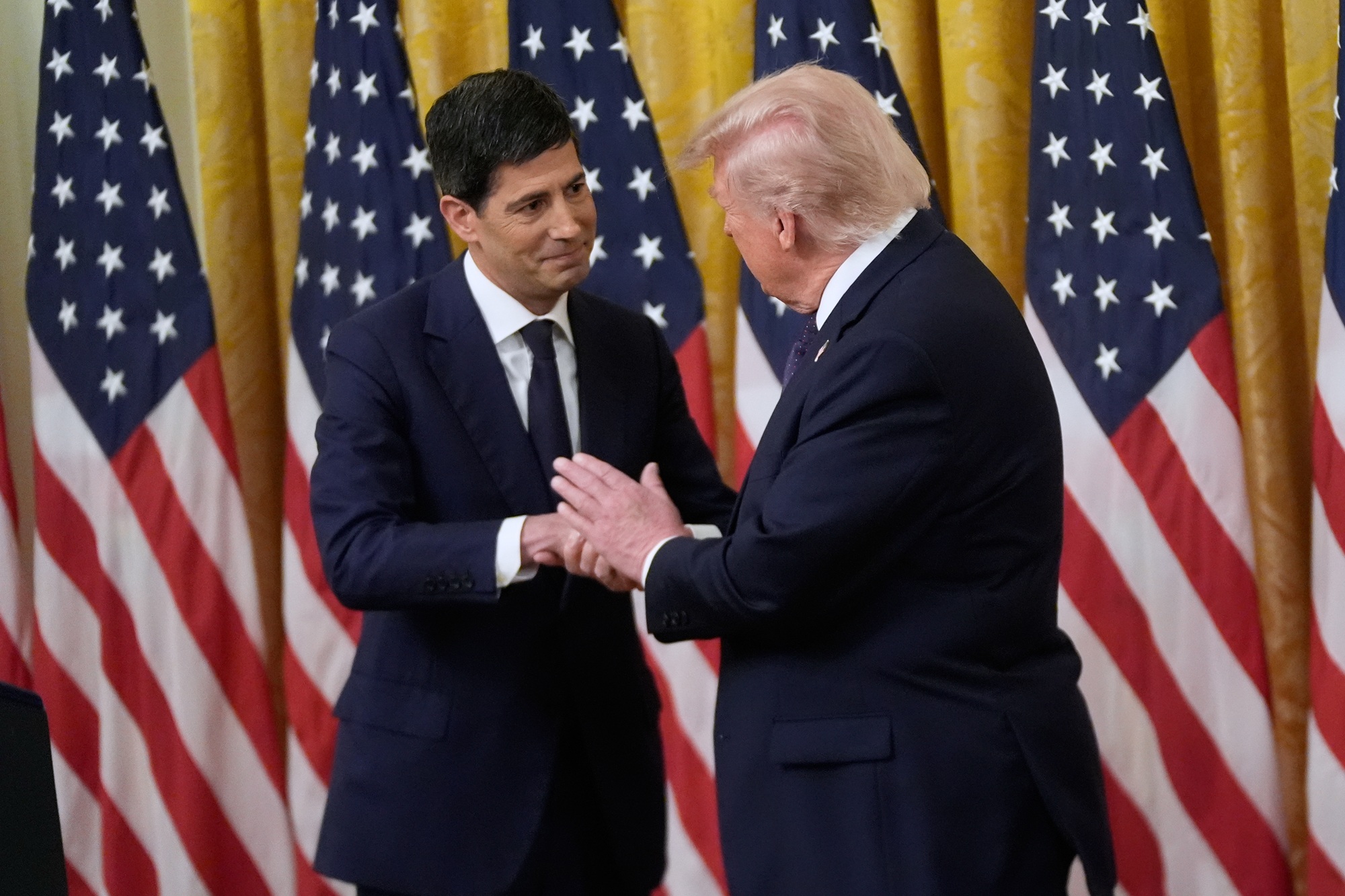
As expected, the Federal Reserve did not raise interest rates today, but neither did it lower them from its current target range of 3.5 to 3.75 percent for short-term rates. And the vote was 9-to-3, with three regional bank presidents—Beth Hammack of Cleveland, Neel Kashkari of Minneapolis, and Lorie Logan of Dallas—voting to raise the target range for the federal funds rate by a quarter percentage point. It was the first time since 2016 that three officials dissented in the same direction.
Read more The CBC Challenge in Detroit
The split vote signals that the Fed, despite President Trump’s wishes for a rate cut, is likely to vote for a rate hike between now and the November midterms. That’s because several factors, some of them of Trump’s own making, are increasing inflation, including the Iran war and retail price increases resulting from Trump’s tariffs.
More from Robert Kuttner
Our impulsive and oblivious president is not good at connecting dots. One set of Trump policies raises inflation, while Trump pressures the Fed to ignore the problem and cut interest rates.
In his report to Congress on July 15, Kevin Warsh, the newly appointed Fed chair, surprised many observers by ignoring the Fed’s “dual mandate” to pursue both price stability and high employment. He declared, “The members of our [Federal Open Market] Committee have no tolerance for persistently elevated inflation. And we share a resolute commitment to restoring price stability.”
He said nothing about employment. The hard line on inflation must have also surprised Warsh’s patron, President Trump.
The annual inflation rate has been running well above 3 percent since March and spiked at 4.2 percent in May before moderating to 3.5 percent in June. Nobody expects inflation to return to anything like the Fed’s target of 2 percent.
In addition, the bond market keeps bidding up long-term rates, a sure sign that investors expect higher inflation. Rates on the 30-year Treasury bond have been steadily creeping up. They are now around 5.12 percent. Mortgage rates typically follow.
Read more Ida B. Wells: Brave Woman
Bonds are under pressure because of the massive increases in the federal debt under Trump, compounded by a lot of borrowing for the AI bubble and data center build-out. In many respects, these signals are a more important factor in Fed thinking than the month-to-month inflation rate.
Warsh has played it much closer to the vest than his predecessor Jay Powell, deliberately abandoning the detailed “forward guidance” about where the Fed believes the economy is headed, which was Powell’s signature. Our friend Jared Bernstein calls this posture Warsh’s “man-of-mystery schtick.”
There are two more meetings of the policy-setting FOMC between now and November, on September 15-16 and October 27-28. The challenge facing the Fed is that the widely expected rate hike won’t fix what is broken about this economy.
The investors pouring massive amounts of capital into the AI build-out will not be deterred by slightly higher capital costs. And since the inflation is not the result of overheated demand but of the impact of the Iran war and Trump’s tariffs, higher rates will not moderate these prices. But leaving rates alone would signal an indulgence of inflation that Warsh and his colleagues want to avoid.
Warsh’s response to reporters’ questions at his press conference remained circumspect. Warsh opened by saying that the most notable change since the FOMC’s last meeting 42 days ago was that “nominal and real interest rates are much higher,” having been bid up by markets. But when asked whether that might mean that the Fed should also raise rates, Warsh refused to say.
Read more The Big Beautiful Bill’s Market-Based Health Care Delusion