
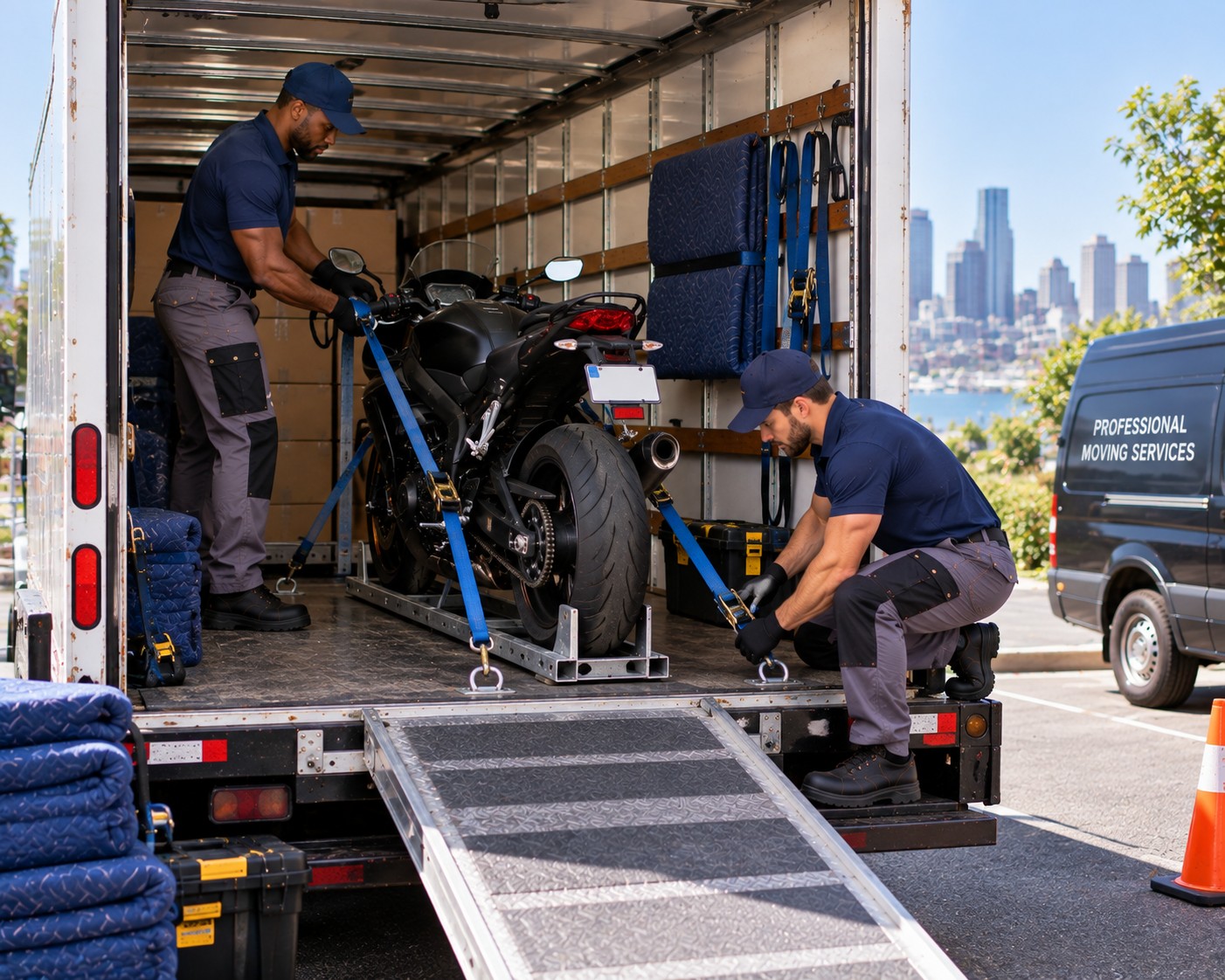
Professional motorcycle transport is a carefully coordinated process that begins well before the bike is loaded onto a carrier. Unlike ordinary household belongings, motorcycles require specialized handling, secure positioning, and attention to details such as tire pressure, steering alignment, accessories, and fuel levels. A successful shipment depends on communication between the owner and the transport team at every stage.
Whether the motorcycle is being relocated to another state, delivered to a buyer, or moved for a special event, understanding the process makes preparation easier. Price Movers provides transportation solutions for different vehicle types, and its general services can be explored at https://pricemovers.com/.
The Process Begins With Accurate Information
Reviewing the Motorcycle’s Details
The transport provider first needs basic information about the motorcycle. This usually includes its make, model, approximate dimensions, weight, running condition, and pickup and delivery locations.
Owners should mention modifications that could affect handling, such as extended handlebars, sidecars, luggage systems, lowered suspension, custom exhausts, or oversized mirrors. A racing bike, dirt bike, scooter, and chopper may each require a different approach.
The condition of the motorcycle is equally important. A bike that does not start or cannot roll freely may need additional equipment during loading and unloading.
Discussing Pickup and Delivery Conditions
The transport team should know whether the motorcycle is located in a garage, apartment building, dealership, private driveway, or storage facility. Narrow entrances, steep ramps, stairs, and limited parking can affect the loading plan.
Clear details allow the provider to prepare for access challenges instead of discovering them at the last moment.
Preparing the Motorcycle Before Pickup
Inspecting and Documenting the Bike
Before the transport crew arrives, the owner should inspect the motorcycle and photograph its visible condition. Images of the bodywork, wheels, mirrors, exhaust, and accessories create a useful record.
Remove personal belongings from saddlebags, storage compartments, and attached luggage. Loose items can move during transportation and may scratch the motorcycle or become lost.
Checking Fuel, Battery, and Tires
The motorcycle should be prepared according to the carrier’s instructions. In many cases, the fuel level needs to be reduced to a safe amount, while the battery may need to be secured or disconnected if required.
Check the tires for visible damage and confirm that their pressure matches the manufacturer’s recommendations. Properly prepared tires help the motorcycle remain stable during loading and securement.
How Loading and Securement Are Managed
Professional motorcycle transport relies on suitable ramps, wheel chocks, straps, and protective materials. The bike is positioned carefully to keep it upright and prevent unnecessary movement.
Protecting Sensitive Components
Straps should be placed at strong, appropriate points rather than across fragile body panels, cables, painted surfaces, or sharp edges. Padding may be added where straps or other equipment could contact the motorcycle.
The transport team also considers the motorcycle’s suspension and steering. Excessive pressure or incorrect positioning can damage components, so securement should be controlled rather than improvised.
Selecting the Right Transport Method
Depending on the shipment, the motorcycle may travel in an enclosed carrier or another suitable transport arrangement. Enclosed transportation can be particularly useful for valuable, customized, vintage, or weather-sensitive bikes.
Price Movers specializes in motorcycle transportation and offers customized solutions for different motorcycles, including racing bikes, dirt bikes, scooters, and choppers. More details are available at https://pricemovers.com/services/vehicle-transport-services/motorcycle-transport.
Monitoring the Shipment
After loading, the transport provider coordinates the journey according to the agreed route and delivery arrangements. The owner should keep communication details available in case access conditions or arrival timing changes.
For longer shipments, it is helpful to confirm the expected delivery window and the person authorized to receive the motorcycle. If the destination has limited access, the unloading point should be discussed in advance.
Inspecting the Motorcycle at Delivery
When the motorcycle arrives, inspect it before signing the final delivery documents. Compare its condition with the photographs taken before pickup. Check the handlebars, mirrors, wheels, exhaust, body panels, and accessories for visible changes.
If the motorcycle was transported with special instructions, confirm that all removable items and keys have been returned. Any concerns should be documented promptly and discussed with the transport representative.
A professional motorcycle shipment is built around preparation, communication, appropriate equipment, and careful handling. When the owner provides accurate information and the transport team follows a structured process, the motorcycle can move from one location to another with fewer complications and greater peace of mind.
[…] Read more How Professional Motorcycle Transport Is Organized From Pickup to Delivery […]
[…] Read more How Professional Motorcycle Transport Is Organized From Pickup to Delivery […]
[…] Read more How Professional Motorcycle Transport Is Organized From Pickup to Delivery […]