
There’s a long history of federal government intervention in the internal affairs of unions. The grounds for such interventions have usually run the gamut from ideology and politics (e.g., the Taft-Hartley Act’s purge of Communists from the ranks of union leaders) to corruption (the control of various unions by organized crime, e.g., much of the Teamsters until roughly 1990). But the personal pique of a government official was never really the reason behind any such intervention—until today.
Read more Organized Money: The Supreme Court Gives Wall Street Its Own Regulator
More from Harold Meyerson
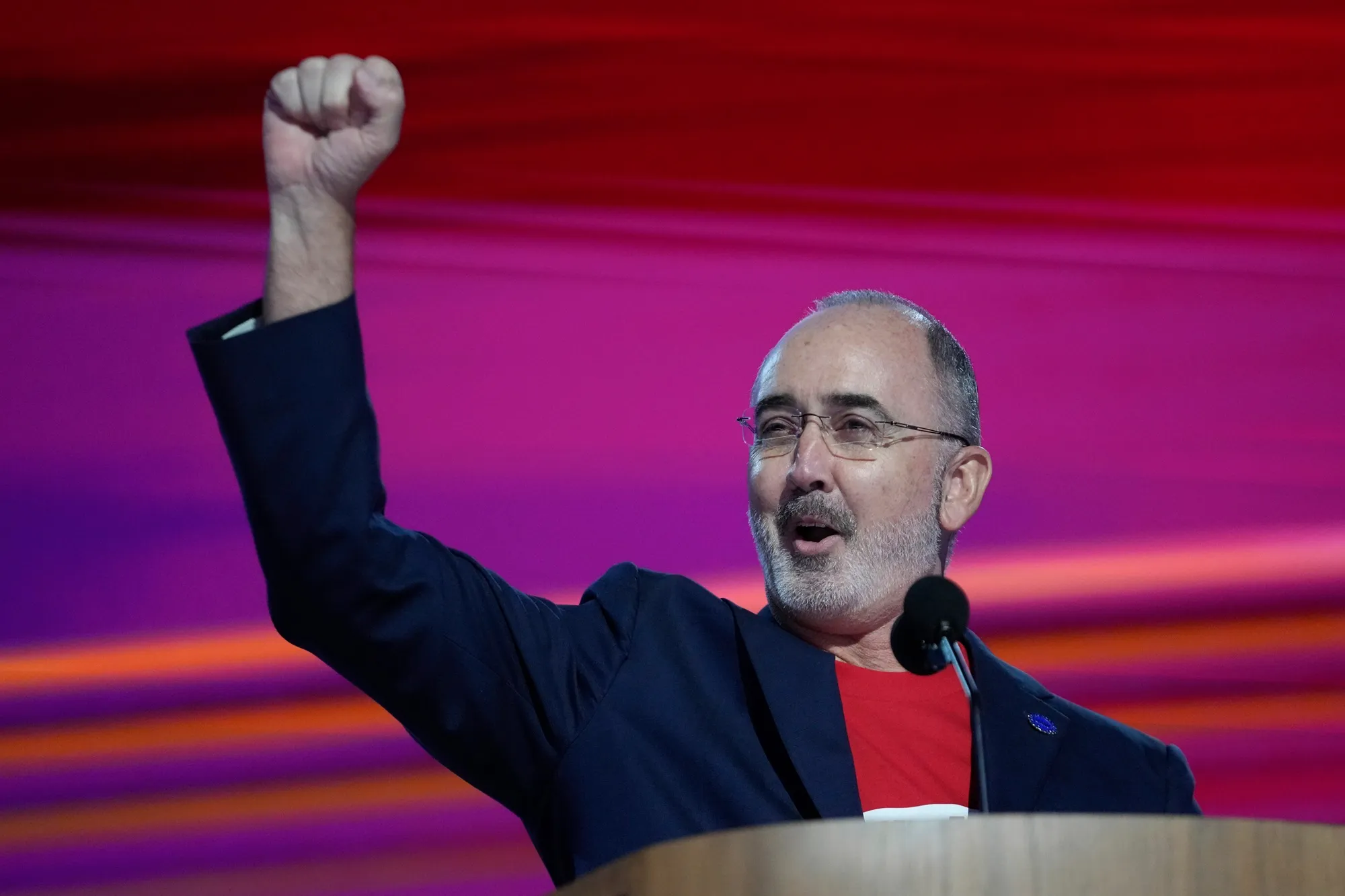
In the past three weeks, the federal monitor charged with overseeing the United Auto Workers has become, in effect, the most significant supporter of UAW Vice President Rich Boyer’s campaign to unseat UAW President Shawn Fain in the union’s upcoming quadrennial election, to be decided by a vote of the rank and file in the next few months. In a settlement reached in federal court in 2020, the union consented to the oversight of a federal monitor, not because there were any allegations of mob involvement, but because two former presidents were in the process of being convicted for spending union funds on their lavish lifestyles. The agreement stipulated that the union’s leaders would be chosen by member elections rather than at conventions, and that its books would be open to inspection to ensure there’d be no misappropriation of union funds as had been the case in the 2010s. The court appointed New York attorney Neil Barofsky to serve as the federal monitor overseeing the union lest any such misdeeds reoccur.
No such misdeeds have reoccurred, but Barofsky has plunged himself into internal UAW politics despite that. As I chronicled in an article that ran in our April issue this year, Barofsky’s involvement in the union’s politics began in December of 2023, when the union’s executive board, at President Fain’s urging, passed a resolution calling for a cease-fire in the Gaza war. That night, Barofsky called Fain from Switzerland, where he was working on a different case, to voice his dissatisfaction with the resolution, acknowledging that he wasn’t calling in his official capacity. The two had words, and Fain’s recollection of the call was that Barofsky called him antisemitic. Shortly thereafter, Barofsky forwarded a statement from the Anti-Defamation League to all members of the union’s executive board about what the ADL claimed was the antisemitism of a UAW local. At the board’s February 2024 meeting, members asked why Barofsky was involving himself in the union’s politics, while Barofsky protested he was not really seeking a policy change from them. Infuriated by both Barofsky’s charges and his denials, Fain said, “For anybody to ever fucking say I’m antisemitic, brother, I’ll fight your ass in front of this building in a heartbeat.”
Within weeks of that meeting, Barofsky initiated an investigation of Fain’s interactions with several UAW leaders, chiefly Secretary-Treasurer Margaret Mock, from whom Fain had stripped control of specific UAW departments (a power which the union’s constitution grants its president). Fain and Mock were both members of a union reform slate that had swept into power in the UAW’s 2022 election, but the clash between Fain’s break-things-to-win-victories staff and Mock’s by-the-book staff had been fierce. Fain had also stripped union Vice President Boyer of his control of the UAW’s Stellantis (formerly Chrysler) division.
In his report issued some months after their dispute at the February executive board meeting, Barofsky charged Fain with unfairly taking power from Mock and Boyer, focusing chiefly on Fain’s clashes with Mock. Fain then agreed to restore the assignments to Mock and Boyer, and Fain’s chief aide, Chris Brooks, agreed to leave the union lest Barofsky ask Donald Trump’s Department of Justice to investigate both Fain and the union.
Three weeks ago, however, Barofsky released another report, focusing entirely on the interchanges between Fain and Boyer in 2023. In the report, Boyer alleges that Fain stripped him of his Stellantis responsibilities out of pique due to his opposition to giving a bonus to workers at a training center that employed Fain’s fiancée, and to Boyer’s refusal to help Fain’s fiancée’s sister win workers’ comp due to an injury she suffered at a Stellantis plant. The report details at length Fain’s interchanges with the company when it refused the fiancée’s sister’s workers’ comp claim, as well as his urging Boyer, as head of the Stellantis division, to help if he could. Barofsky’s report also includes the reasons Fain gave for his removing Boyer’s Stellantis responsibilities, most of which the report disputes.
Read more Silicon Valley Needs Washington After All
The most telling aspect of the report isn’t really its conclusions; it’s its timing. On June 17, Boyer announced he was running against Fain for the presidency of the union. On June 25, Barofsky released his report, detailing exclusively the 2023-2024 exchanges between Boyer and Fain and upholding Boyer’s side of the story. Since then, Trump’s Justice Department has begun an investigation of Fain for the allegations that Barofsky has leveled against him: providing a bonus to workers at a training center that employed his fiancée, and trying to help his fiancée’s sister get workers’ comp.
How either of these rises to the level of, say, union leaders spending union funds on homes in Palm Springs (for which those two former UAW presidents were convicted) or ceding control of their union to organized crime (misdeeds, while not common, also not limited to the Teamsters’ ancien régime) is not immediately apparent. Then again, Trump’s Justice Department has repeatedly shown itself eager to go after political opponents (e.g., Adam Schiff and Letitia James) in the absence of any evidence of criminality. That surely must have occurred to Barofsky before he forwarded his allegations to Trump’s DOJ.
What does rise to the level of a genuine scandal is the de facto involvement of a federal monitor of a union in the campaign of a union leader for the union’s presidency—particularly inasmuch as the UAW constitution explicitly states that only UAW members and retirees in good standing may contribute anything of value to any candidate’s campaign for a UAW leadership position.
Does that put Neil Barofsky in violation of the very constitution he’s supposed to be defending? Should the Democrats capture the House or the Senate or both later this year, their respective Labor Committees may want to summon Barofsky and pose that question to him.
Read more Trump’s Plan to Corrupt American Science