
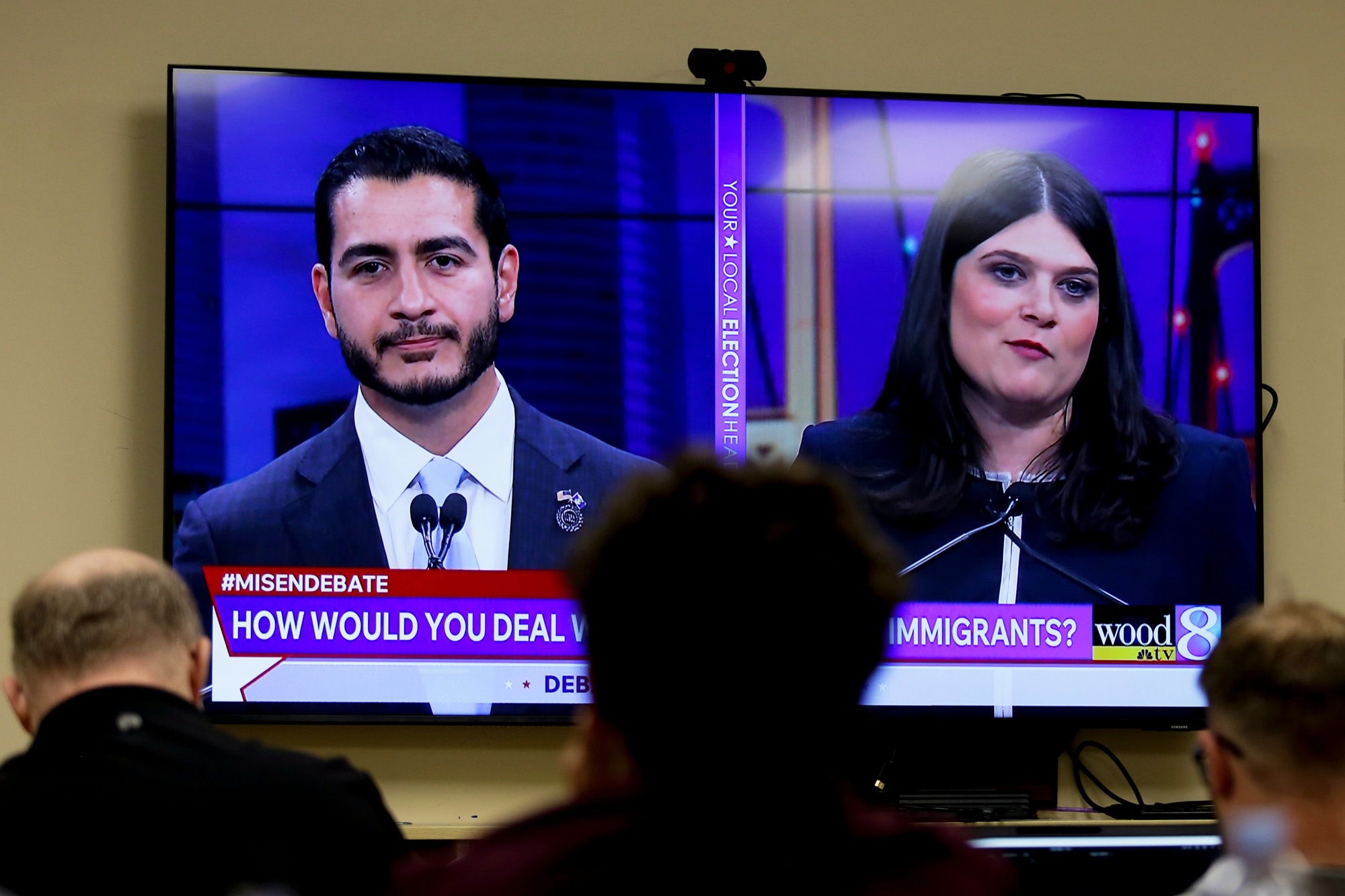
Last night’s debate between Abdul El-Sayed and Rep. Haley Stevens for the Democratic nomination for Michigan’s U.S. Senate seat was feisty. Stevens, who is behind in the polls, was desperate to deliver a set of well-rehearsed attack lines about El-Sayed not releasing his taxes, wanting to be a “celebrity” through podcasts and speaking engagements, doing nothing to boost Kamala Harris in the 2024 election (this one isn’t true; El-Sayed endorsed and campaigned for Harris), and having his father-in-law run a super PAC on his behalf. (For the record, the father-in-law, Jukaku Tayeb, has put in $200,000 for a modest digital ad and direct mail campaign; Stevens has more than $30 million in support from super PACs in this campaign, including more than $7 million from AIPAC’s super PAC.)
Read more The Great AI Repricing Isn’t Going Well
More from David Dayen
El-Sayed stayed on the issues that have animated his campaign, exemplified by the slogan “Get money out of politics, put money in your pocket, and Medicare for All.” He returned to the theme again and again in saying that status quo politics and status quo politicians like Stevens were inadequate to the challenges facing the country.
What I found more interesting were the relatively rare moments when Stevens wasn’t avoiding questions to launch her attacks. Because when that happened, she said that Israeli Prime Minister Benjamin Netanyahu has failed and has made Jewish people less safe, that ICE is out of control and agents must be held criminally accountable, that America needs paid family leave, that billionaires should pay higher taxes, that data centers should be forced to pay utility and water bills for individuals, that the Social Security payroll tax gap should be scrapped, that Social Security Administration workers should be rehired, and that she would “stand up for the little guy.”
It’s not that I believe much, or maybe any, of this. Stevens is an ideological moderate who would slot in as a reliable vote for Chuck Schumer’s policy agenda if he manages to drag her across the finish line. She opportunistically capitalized on Netanyahu calling her out by name in a CNN interview, but her standing with pro-Israel donors, who helped her keep her House seat to the tune of $5 million in a member-on-member race against Andy Levin in 2022, is undisputed.
What’s more interesting is that the last refuge of Democratic candidates who face defeat is to veer to the left. Scrapping the Social Security cap is a Bernie Sanders policy. So is taxing billionaires.
This trip to the left has a long history. Al Gore decided in 2000 at the Democratic convention to make his presidential race about “the people versus the powerful,” after falling behind. Obama made his somewhat uncomfortable turn to populism in 2012 when it looked as if Mitt Romney might win. Frequently this campaign season, super PACs backing candidates with big dollars paint them as taking on ICE.
Read more Not All Nepo Babies Are Trumps
The Michigan race this year is sometimes characterized as part of a larger battle for the soul of the Democratic Party. If that’s the case, judging from Stevens’s words the progressive side has already won.
The reason it’s not believable coming from Stevens is because of the points El-Sayed has elevated in his campaign, to great effect: The same promises from the same politicians buoyed by the same money is not going to lead to different results. El-Sayed is focused on money in politics because it’s a good heuristic for how to assess candidates whose ideas and promises have begun to converge. In this telling, getting money out of politics is a key to unlocking every policy door.
“I think we need to think differently. That means standing up to Wall Street, not taking their money to fund your campaigns,” El-Sayed said last night. “As long as we are taking money from those corporations then we are not going to regulate them.”
The old era exemplified by legendary California Assembly Speaker Jesse Unruh saying that politicians have to be able to “take their money and then vote against them” is impossible to square with the last two decades of political stasis and small-ball solutions when the money is brought to bear. I wish it were different, but it’s not. In the end, El-Sayed has simplified the stakes, in his race and in Democratic politics: Do you want a candidate who is bought, or not?
Read more Commies EVERYWHERE!