
Executives at Home Depot and Lowe’s want to hide how—and whether—they protect customers’ civil rights when they share automatic license plate reader (ALPR) data with local cops and federal agents, who use the information to hunt immigrants and others.
Read more Is Chaos the Point in South Carolina?
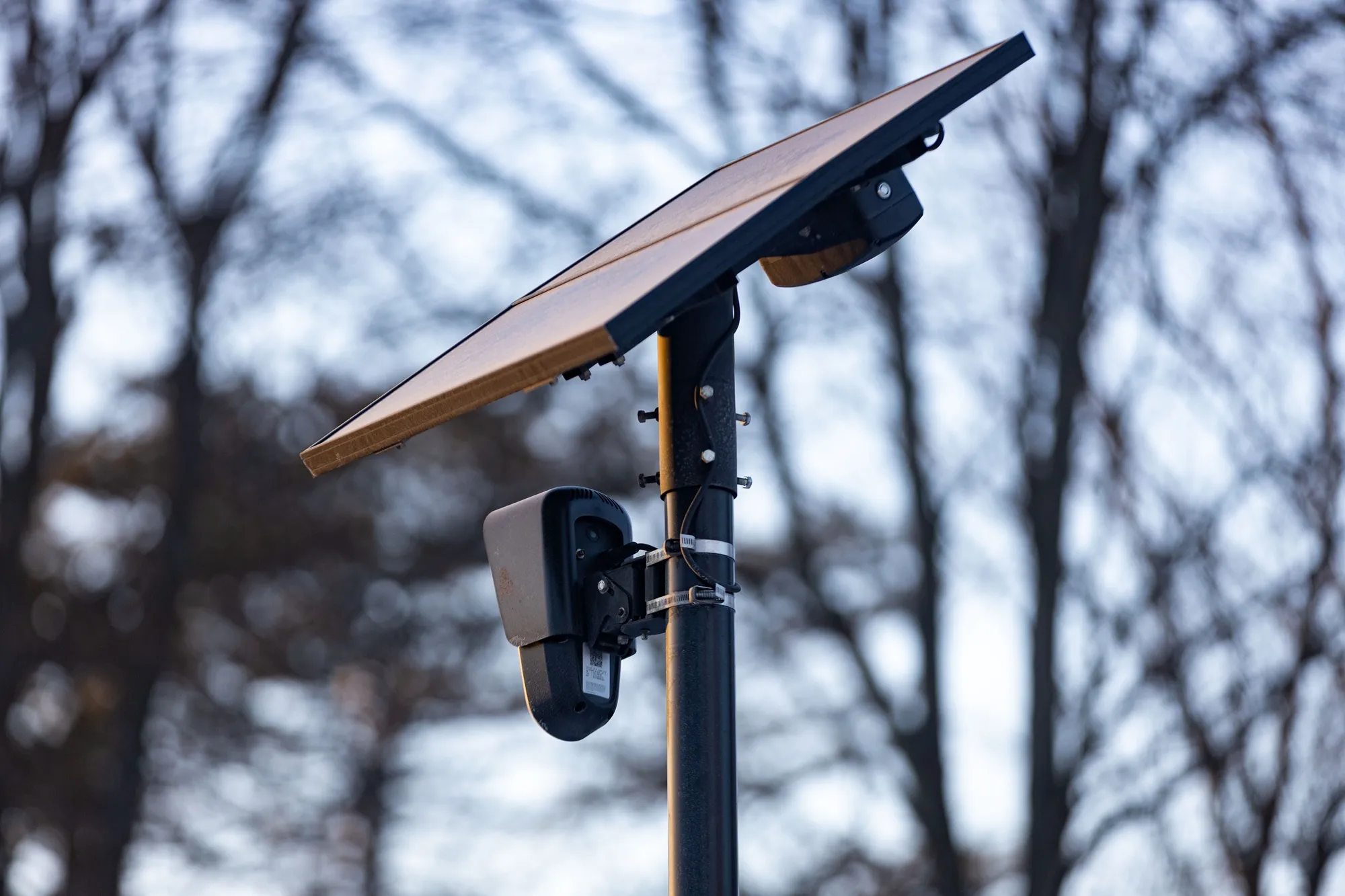
That’s the message from corporate board members responding to a pair of shareholder proposals. The shareholders are asking them to produce reports describing how their company assesses the risks to customers’ data privacy when they share sensitive consumer data, including images taken by the Flock Safety cameras installed in both companies’ parking lots. The cameras snap pictures of vehicles as they drive by, and the pictures go into a searchable database that police officers can use to find where a car was, and when. The images are so precise, civil rights advocates said, that Flock can identify cars that have no license plate, by dents and other markings.
More from Whitney Curry Wimbish
But Flock cameras and its database are also easily hacked, enabling anyone to watch children and to stalk and terrorize romantic interests, undocumented immigrants, people seeking reproductive health care, or people of the “wrong” race. YouTuber Benn Jordan has demonstrated how easy such hacking can be, calling the ability to spy on people “Netflix for Stalkers.”
The two companies’ annual shareholder meetings are upcoming, and the petitioners have asked them to explain ways they could mitigate those risks that go beyond legal compliance.
“The concern with data sharing is that … you’ll put immigrants at risk, because we know this technology is being used by law enforcement agencies to conduct searches of immigrants,” said Gideon Epstein, policy counsel for the Technology for Liberty Program the ACLU of Massachusetts. “Looking at real Flock audit data, especially from 2025, we have seen literally hundreds of searches from police officers searching explicitly for immigration-related matters.”
Epstein noted that while Flock said last year that it had ended a pilot program with the Department of Homeland Security, local police departments still conduct searches on behalf of immigration agents, an issue he wrote about last fall.
FLOCK SAFETY CAMERAS ARE DRAWING FURY from community members across the country, who are outraged that police department and municipal officials are contracting with the company to create a mass surveillance network. Flock is one of two major companies dominating the ALPR market and the go-to vendor for municipalities for their aggressive marketing strategy, Epstein said. As 404 Media has reported, Flock has at least 80,000 cameras in its national database. The other big provider is Vigilant Solutions, owned by Motorola Solutions, which maintains a database of images collected by cameras installed on cop cars.
Flock officials insist that their customers own the data the cameras capture, and that the company does not sell it to third parties. But they don’t bar customers from selling the data themselves, and they give police customers access to a nationwide search. The search ability allows cops to search for practically any reason, legal advocates told the Prospect, sometimes writing “investigation” into the field that requires an explanation. That makes it impossible to audit.
As of last month, cops had used Flock and other ALPR cameras in 16 instances to “keep tabs on their [own] romantic interests, including current partners, exes, and even strangers who unwittingly caught their eye in public,” the Institute for Justice reported. Last year, Texas cops used Flock to search 83,000 cameras nationwide to hunt for a woman they said had performed a self-administered abortion, including in states where abortion is legal, 404 Media reported. In another instance, the same news outlet found that Flock’s sales workers ran a pitch by accessing the company’s cameras in an Atlanta suburb, including “in a children’s gymnastics room, a playground, a school, a Jewish community center, and a pool.”
In some cases, communities that reject mass surveillance win their demand to get rid of it. In Ithaca, New York, city officials said in March that they were terminating their agreement with Flock Safety for a camera and license plate reader system and discontinuing its use. Some politicians have tried to maneuver their way out of heeding their constituents’ demands. After residents in Cleveland, Ohio, objected to the city’s 100 Flock cameras, the pro-Flock mayor, Justin Bibb, decided on May 19 that the anti-Flock city council could have the final say over whether to renew the contract.
In other instances, officials persist in these surveillance practices, customarily by insisting that mass surveillance keeps everyone safe. In Troy, New York, for example, Republican Mayor Carmella Mantello announced a state of emergency declaration on April 1 to keep the city’s 26 Flock cameras where they were located, rather than heed calls from Democrats and community members to get rid of them. Mantello subsequently agreed to some limits, the city announced Tuesday, including updating the policy to explicitly prohibit the cameras from being used for immigration enforcement. And after the city council of Bandera, Texas, voted to get rid of their planned Flock Safety AI program earlier this month, one of the councilmembers who wanted to keep it said he was so mad that he would use the next meeting to propose banning all cellphones, outward-facing cameras (“we must remove every lens in town”), and “a total termination of all internet services and electronic record-keeping. We are going back to 1880, paper ledgers and cash only,” Jeff Flowers wrote in his “Bandera Declaration of Digital Independence.”
The federal government is also using Flock cameras, and the administration wants the FBI to have access to ALPRs nationwide. The Department of the Interior last year awarded Flock up to $433,600 in public funds, saying the United States Park Police has a requirement to deploy a Flock Safety automated license plate reader system in the greater Washington, D.C., metro area, the federal spending database shows.
Read more Tom Steyer’s Problem
Epstein said that while there are law enforcement and municipal officials who are unreceptive to ending contracts with Flock, some have been moved when constituents and other community members explain their concerns. He said he was encouraged by the fact that shareholders are trying to engage with corporate executives and that he hoped they were listening.
The shareholders’ proposals are “just asking for more information,” he said, “which seems like an abundantly reasonable thing to ask for.”
SHAREHOLDER PROPOSALS ARE A CORPORATE governance tool also called “proxy voting” that ostensibly allows investors in a public company or mutual fund to influence corporate behavior, though fewer than half of all submitted proposals . Those that do typically fail, in part because of the outsized influence of board recommendations.
At Home Depot, board members responded to by saying they already investigated the matter and found that customers are safe. Shareholders will vote on it at the company’s annual shareholder meeting today. Board members have recommended voting against the proposal.
The company “has addressed the concerns outlined in the proposal in an appropriate and sufficient manner through existing Board and management oversight, transparent policies, and specific technical safeguards, the Board believes the requested report is unnecessary,” Home Depot board members wrote in their response to the proposal.
The AFL-CIO Reserve Fund submitted a to Lowe’s, which also uses Flock cameras. The group pointed out that Border Patrol officials monitor drivers to identify and detain people whom they deem suspicious, that Homeland Security Adviser Stephen Miller reportedly directed ICE agents to target raids at Home Depot and other stores where day laborers typically gather for hire, and that Border Patrol agents reportedly detained immigrant day laborers at a Lowe’s in New Orleans.
“We are concerned that our Company’s collection of sensitive personal information and license plate data may be used by law enforcement in ways that potentially could violate the civil liberties and data privacy expectations of our Company’s customers,” the AFL-CIO Reserve Fund proposal states.
Lowe’s investors will consider the AFL-CIO’s proposal at the company’s shareholder meeting on May 29. As at Home Depot, Lowe’s board members also recommended voting no.
Immigration advocates and other civil right proponents said shareholders should ignore those recommendations and have urged them to vote yes.
“The shareholders aren’t even asking for a policy to be created: Just look into what is happening with the Flock cameras on their property. Make sure that consumers are protected … They’re clearly just asking for a third party to look at these things to make sure Home Depot is acting as ethically as possible,” said Rebecca Winter, executive director at the civil rights nonprofit Mass 50501. But the board members “are saying, ‘No. We’re doing an internal review. It’s fine.’ An internal review from the same people who decided to bring in Flock in the first place.”
Read more The Real Stakes Behind California’s Billionaire Tax Fight: Health Care Access
Spokespeople for Home Depot and Lowe’s did not respond to requests for comment.